
Advertisement & Commercial Disclosure: This article contains commercial links. The publisher has a commercial relationship with the featured No. 1 product and may receive compensation from selected purchases.
5 Smart Peephole Video Doorbells Compared in 2026
Looking for a smart peephole video doorbell? Read this comparison before you buy.

Eleanor Vance
7-Year Smart Home Product Reviewer
eleanor.vance@weselect.org
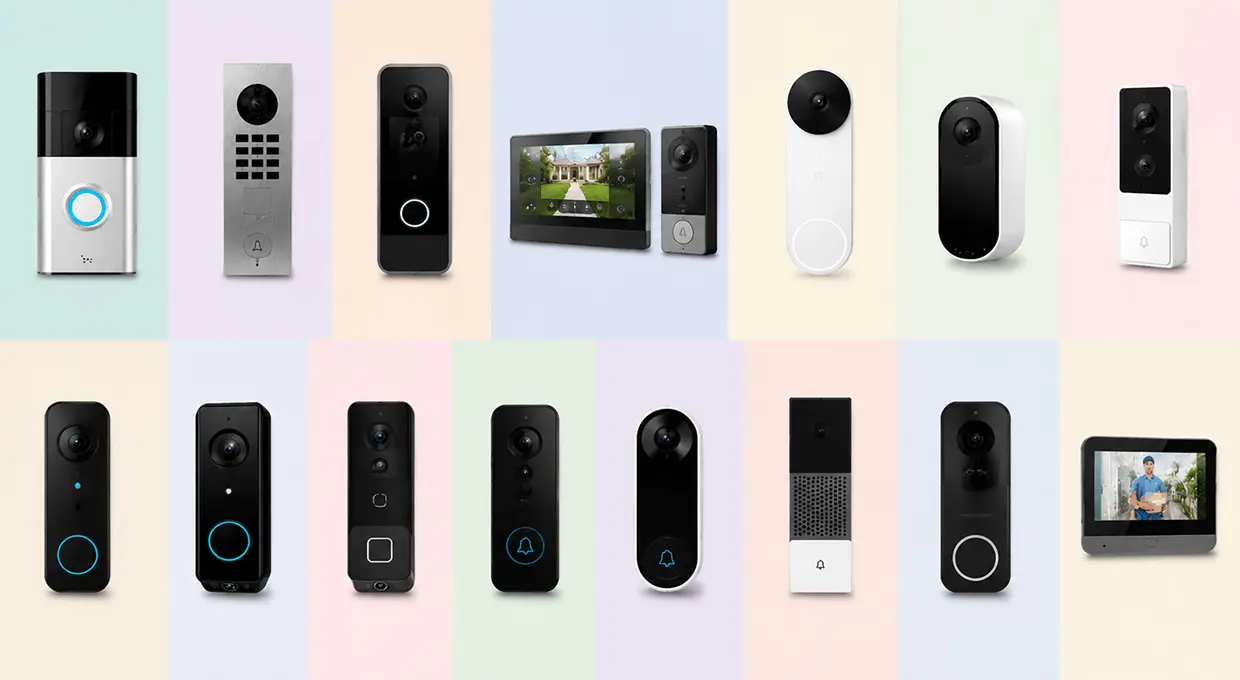
Smart video doorbells can help households check visitors, receive motion alerts and review recorded events. When comparing models, homeowners and tenants often need to consider three practical issues:
Installation Restrictions: Some property management companies and landlords do not allow drilling into exterior walls or doors.
Subscription Costs: Some brands reserve video history and selected features for paid cloud plans. Without a subscription, the available features may be more limited.
Indoor Viewing Options: App-only products may be less convenient for households that want a dedicated indoor display.
To help readers compare hardware performance, ownership costs and day-to-day usability, we researched and compared 25 smart doorbells and peephole cameras using published specifications, product documentation, retailer information and available user feedback. The five models below are our editorial picks based on the criteria described in this guide.
Before viewing the comparison, please review our evaluation criteria and buying guide.
We Evaluate Smart Peephole Doorbells Based on 6 Criteria
Functionality
We examined whether each product offered a practical set of home security features, including:
- Daytime image quality;
- Infrared night vision;
- PIR motion detection;
- Instant mobile alerts;
- Automatic event recording;
- Two-way audio;
- Wide-angle viewing;
- An indoor display;
- Local video storage.
Installation Convenience
We considered:
- Whether drilling is required;
- Whether power or network cables must be installed;
- Whether a professional electrician is needed;
- Whether the existing peephole can be used;
- Compatibility with different door thicknesses and peephole sizes;
- Whether an average user can complete the installation;
- Whether the original door can be restored when moving out.
Ease of Use
We evaluated:
- How quickly the indoor display shows the visitor;
- Whether the mobile app is easy to set up;
- How easily users can find recorded events;
- Whether older people and children can use the product without a phone;
- The reliability of communication between the doorbell, display and app;
- The number of steps needed to view, answer or replay an event.
Products that depend entirely on a mobile app may become less useful when the phone is unavailable, notifications are disabled or the home internet connection becomes unstable.
Battery Life
We considered:
- Battery capacity;
- Realistic usage time;
- Power consumption with night vision and motion detection enabled;
- Low-battery notifications;
- Power-saving features;
- Charging convenience;
- Whether the indoor unit must be removed for charging;
- Performance in busy apartment corridors.
Advertised standby time is usually measured under ideal conditions. Actual battery life depends on motion frequency, night vision usage, remote viewing and two-way conversations.
Privacy
Video doorbells may record visitors, delivery workers, neighbours and family members. Storage and privacy were therefore important parts of our evaluation.
We checked:
- Whether MicroSD or other local storage is supported;
- Whether recordings continue when the internet is unavailable;
- Whether a subscription is required to access previous events;
- Whether users can manage, delete and export recordings;
- Whether loop recording is available;
- Whether the app requests unnecessary permissions;
- Whether family access can be controlled.
Local storage does not eliminate every privacy risk, but it can reduce dependence on third-party cloud servers and give users more control over their recordings.
Value For Money
We compared the full ownership cost rather than focusing only on the initial purchase price.
This included:
- Product price;
- Installation and electrician costs;
- Cloud recording subscriptions;
- Indoor monitor costs;
- Control console or storage hardware;
- Memory cards and accessories;
- Long-term maintenance.
A product with a moderate purchase price may become expensive if it requires professional installation, additional hardware and a continuing subscription.
When shopping for a smart video doorbell, it is easy to be distracted by marketing claims. Based on our criteria, these are the key points to consider:
Features to Look For
Core Security Features (Night Vision & Motion Detection)
Look for infrared night vision that provides a clear view in low light and configurable motion detection that can help reduce unnecessary alerts.
Local Storage & No Mandatory Cloud Subscription
Devices that support local MicroSD storage can reduce reliance on third-party cloud services and may avoid mandatory cloud subscription fees for local recording. Local storage does not eliminate every privacy or security risk, and potential savings vary by brand and plan.
Indoor Display
For households with older adults or children, a dedicated indoor display can make it easier to see and speak with visitors without relying entirely on a smartphone. It may be more convenient when a phone is unavailable or an app is slow to open.
Existing-Peephole Installation
For renters or apartment residents, products that use an existing compatible peephole can avoid drilling into the exterior wall. Check the required hole diameter and door thickness first, as traditional 12–14 mm peepholes may need to be widened.
Potential Drawbacks to Consider
Hardwired Systems with Complex Installation
Hardwired systems can be appropriate for permanent installations, but wall drilling, cable routing and professional installation may increase the total cost. Check whether this is practical for your property before buying.
App-Only Doorbells
App-only doorbells may be less convenient if the phone is unavailable, its battery is flat or the home internet connection is interrupted. Consider a model with an indoor display when independent viewing is important.
Short Free Video-Retention Periods
Some brands provide only a limited free retention period for recorded events. Check how long clips remain available and whether saving, downloading or reviewing older footage requires a subscription.
Before Buying: Check Your Door’s Peephole Size
If you are considering a smart peephole doorbell that passes through an existing door hole, check the peephole diameter and door thickness before purchase:
Traditional Standard Peepholes (12 mm–14 mm): Common in older apartments and traditional security doors. These openings may be too small for some electronic peephole models.
Modern HD/Wide-Angle Peepholes (16 mm–28 mm): Often found in newer homes and generally use a wider barrel.
Smart Electronic Peepholes: Many models require an existing opening larger than 16 mm, although the exact requirement varies by product.
Practical Tip: A compatible opening of 16 mm or more may allow installation without widening the existing hole. A traditional 12–14 mm peephole may need to be widened. Only modify a door when permitted by the owner or property manager, and seek professional help if you are unsure.
5 Smart Doorbells Compared in 2026
We researched and compared 25 smart doorbells using the evaluation criteria above. The five models below are our editorial picks based on product information, installation requirements, storage options and overall value.


Price
£129
Editorial Grade
A+
Review
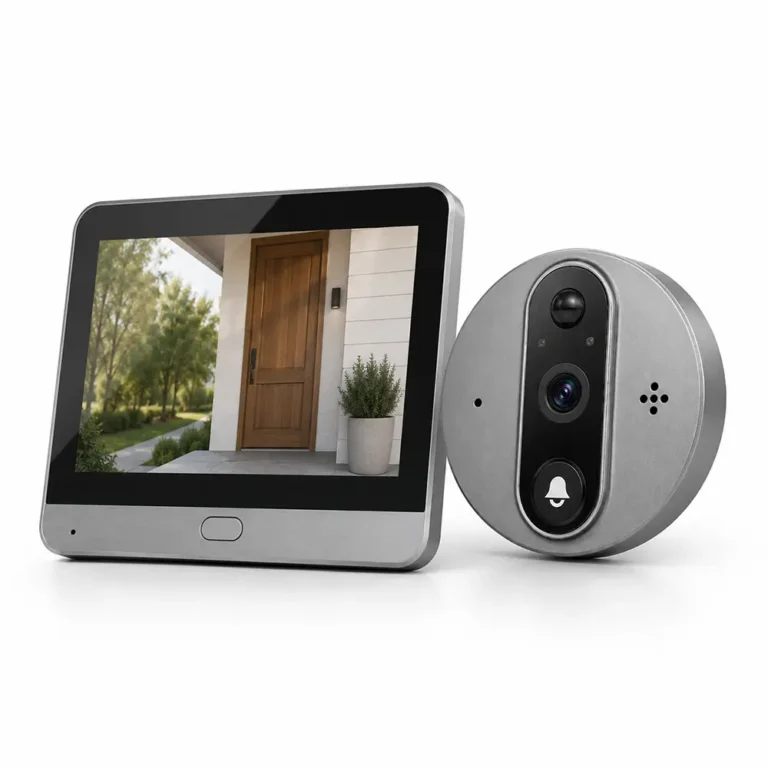
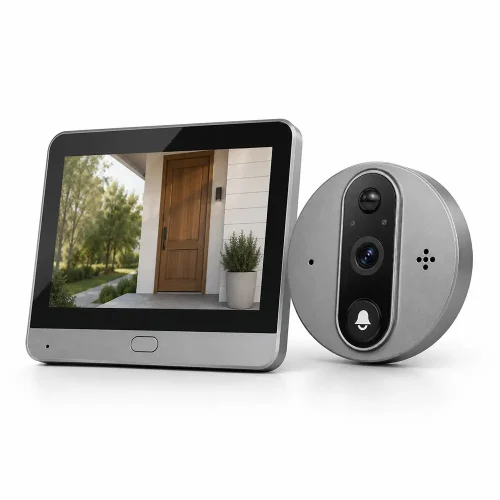
The Noventrixa Smart Peephole Video Doorbell is designed for apartment residents and renters who want to use an existing compatible peephole. It requires a hole larger than 15 mm, and traditional 12–14 mm peepholes may need to be widened. On compatible doors, it does not require drilling into the exterior wall. Based on the six criteria used in this comparison, it offers a practical balance of features, installation convenience and price.
Its multi-layer coated lens is designed to help reduce corridor glare. Infrared night vision and PIR motion detection support visitor monitoring in low-light conditions, while the built-in speaker enables two-way audio.
The indoor unit includes a 4.3-inch display, allowing household members to view visitors without relying entirely on a smartphone. A full charge provides approximately 20–30 days of use, depending on motion activity, night-vision use, live viewing and two-way audio.
The device supports local MicroSD storage of up to 128GB and does not require a mandatory cloud subscription for local recording. Local storage can reduce reliance on third-party cloud servers and give users more control over recordings, but it does not eliminate all privacy, account or network-security risks.
Pros:
- Uses an Existing Compatible Peephole
- 4.3-Inch Indoor Display
- Multi-Layer Coated Lens
- 3MP Camera with 1080p Video Output
- Infrared Night Vision
- PIR Motion Detection
- 120-Degree Viewing Angle
- Two-Way Audio and Simple Setup
- Up to 128GB Local Storage
- No Mandatory Cloud Subscription for Local Recording
- 5000mAh Rechargeable Battery
- Family Sharing
Cons:
- Traditional 12–14 mm peepholes may need to be widened.
- Supports 2.4GHz Wi-Fi rather than a direct 5GHz Wi-Fi connection.
- Available Online Only
- Availability May Vary

Price
£449
Editorial Grade
A-

Review
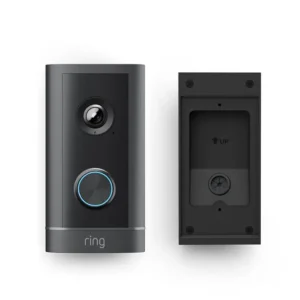
The Ring Video Doorbell Elite is a premium built-in wired doorbell.
It uses PoE, allowing one Ethernet cable to carry both power and network data. Compared with ordinary Wi-Fi doorbells, this can provide a more stable connection and continuous power.
The system supports HD video, a wide field of view, two-way audio, instant alerts and live viewing.
However, it must be installed into the wall and connected to an Ethernet cable. In a property without existing network wiring, professional installation may be required.
Ring devices can usually provide live notifications, live viewing and two-way communication without a subscription. However, reviewing, saving or sharing previously recorded events normally requires a paid Ring subscription, with prices varying between European countries.
Pros:
- Stable PoE network connection;
- Continuous wired power;
- Mature smartphone app and smart home ecosystem;
- Live notifications and two-way audio;
- Suitable for homes with existing Ethernet wiring.
Cons:
- Requires built-in wall installation;
- Professional wiring may be necessary;
- Not suitable for many rental properties;
- No dedicated indoor display is included;
- Recorded event history normally requires a subscription;
- Long-term ownership costs can increase over time.

Price
£838
Editorial Grade
B+

Review
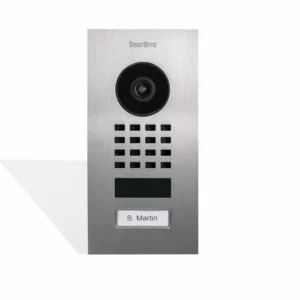
The DoorBird D1101V is a professional-grade IP video door station.
It features a premium stainless-steel housing, 1080P video, a 180-degree wide-angle lens, infrared night vision, two-way audio and an advanced motion sensor.
The device supports Wi-Fi, LAN and PoE connections, making it suitable for professional home automation and access-control systems.
Its build quality and expansion capabilities are excellent, particularly for high-end homes, offices and commercial entrances.
However, the system requires either 15V DC or PoE power and involves wall installation, wiring and access-control configuration.
The D1101V also does not include a complete indoor video monitor. Buyers who want an official indoor station need to purchase it separately.
Pros:
- Premium stainless-steel construction;
- 180-degree wide-angle view;
- Infrared night vision;
- Advanced motion detection;
- Supports PoE and local network connections;
- Suitable for professional access-control systems.
Cons:
- High purchase price;
- Installation costs can be significant;
- Requires permanent power or PoE wiring;
- Difficult for tenants to install;
- Indoor video monitor is not included;
- Excessively complex for users who only need basic visitor monitoring.

Price
£323
Editorial Grade
B

Review
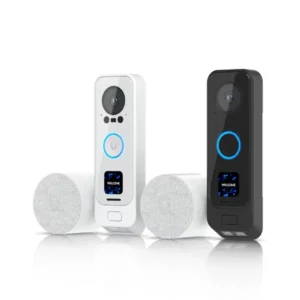
The Ubiquiti G4 Doorbell Pro uses a dual-camera design, with a main camera for visitors and a downward-facing camera for packages. It supports infrared night vision, two-way audio and integration with the UniFi Protect platform.
It does not include a dedicated indoor display and is mainly managed through the app and UniFi Protect. Recording and storage generally require a compatible UniFi console or network video recorder, which can increase the total system cost.
The parcel camera may be useful for households that receive frequent deliveries. For households already using compatible UniFi networking and security products, the doorbell can be a logical addition. For someone seeking a standalone video doorbell, the wider system requirements may be less practical.
Pros:
- Separate visitor and parcel cameras;
- Useful coverage of packages on the ground;
- Infrared night vision;
- Two-way audio;
- Strong integration with the UniFi Protect ecosystem;
- Suitable for users who already own compatible UniFi hardware.
Cons:
- No dedicated indoor display;
- Mainly controlled through the app and UniFi Protect;
- A compatible controller and storage device are normally required;
- Higher technical setup requirements;
- The doorbell price does not represent the full system cost.

Price
£299
Editorial Grade
B-

Review
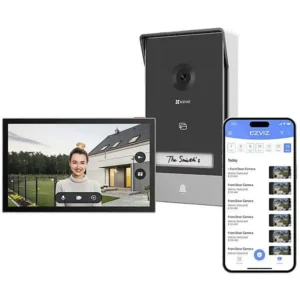
The EZVIZ HP7 is a complete smart video intercom system rather than a simple peephole replacement.
It includes a 2K camera, a 7-inch indoor touchscreen, two-way audio, human motion detection, infrared night vision and RFID card access.
It also supports local MicroSD storage and optional cloud services. Its feature set may suit private houses, courtyard entrances and external gates.
The indoor and outdoor units require a wired connection, and the system is not a direct replacement for an existing peephole. Professional installation may be needed, so it may be less suitable for renters or apartments where wall or cable modifications are restricted.
Pros:
- 2K video resolution;
- Large 7-inch indoor touchscreen;
- Infrared night vision;
- Human detection;
- RFID access control;
- Supports local storage;
- Suitable for courtyard gates and private homes.
Cons:
- Requires physical wiring;
- Not a simple replacement for an existing peephole;
- Professional installation may be necessary;
- The system may be too complex for a standard apartment;
- Some cloud features may involve additional charges.
Our Editorial Pick

Our Top Pick
Smart Peephole Doorbell
How we rate products
The ranking in this article is based on features, installation convenience, ease of use, battery performance, storage options, privacy considerations and overall value. Scores are editorial and are not aggregated customer ratings. No single product will be the right choice for every household.