
Top 5 Best Smartwatches of 2026
Shopping for a smartwatch? Read this before you buy.

Paul Koch
I’m Paul Koch, a fitness coach and wearable-tech reviewer focused on biohacking, recovery, and everyday performance. “Good enough” does not cut it. I look for precise sensors, clean app data, dependable GPS, and AI-driven ECG/EKG insights that make health tracking easier to understand. To me, a smartwatch is not just a gadget—it is a wrist-based wellness dashboard for training, recovery, and daily confidence. I do not chase trends; I follow the data, because better data leads to better decisions.
Paul@weselect.org
Author’s Note: Before publishing this report, we spent two months reviewing and comparing some of the most talked-about smartwatches on the market. We started with 37 highly rated products, then narrowed the list based on expert feedback, real user reviews, feature depth, usability, battery performance, and overall value. The five smartwatches that performed best in our evaluation are ranked at the end of this article.
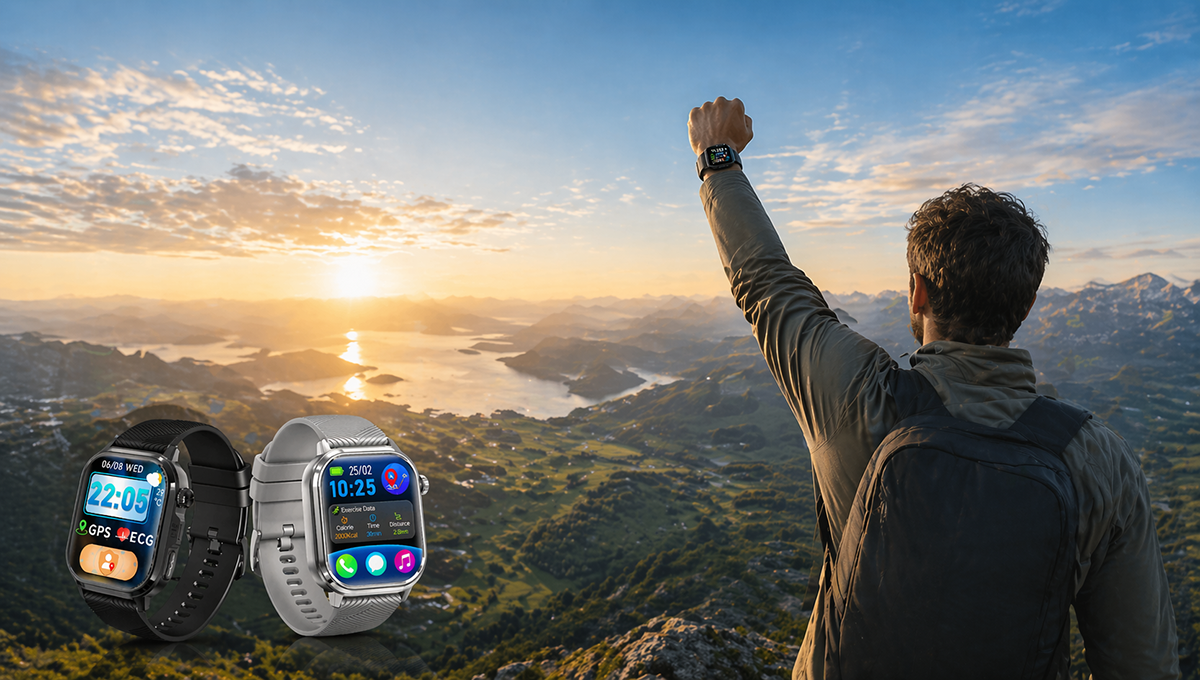
Today’s smartwatches are no longer just accessories or basic step counters. The best models now combine advanced health tracking, real-time GPS, workout analysis, communication tools, and safety features in one compact wearable device built for everyday life.
Features such as ECG/EKG monitoring, heart-rate tracking, blood oxygen measurement, sleep analysis, fall detection, and SOS emergency alerts are becoming increasingly important for people who want a better picture of their wellness, fitness, and personal safety.
That is why more shoppers are asking:
- “How do I choose the right smartwatch?”
- “Which health features are actually worth paying for?”
- “Do I really need ECG/EKG and built-in GPS tracking?”
- “Is a smartwatch worth buying in 2026?”
If you are looking for a smartwatch that balances health insights, fitness tracking, safety, battery life, and daily convenience, this guide will help you make a smarter buying decision.
Why Choose a Smartwatch With Accurate Health Tracking?
Real-Time Health Monitoring
Modern smartwatches with higher-quality sensors can continuously monitor key wellness data such as heart rate, blood oxygen, sleep quality, stress trends, HRV, ECG/EKG, and body temperature. Better models also sync this information to a companion app, making it easier to review patterns, compare daily changes, and understand long-term trends.
AI Health Insights
Today’s high-end smartwatches go beyond simple tracking. With AI-powered health analysis, complex data such as ECG/EKG, HRV, sleep patterns, stress levels, and blood oxygen readings can be turned into clear wellness insights and personalized reports—helping users understand how their body is responding to daily routines, workouts, travel, and rest.
Smart Safety Alerts
Accurate smartwatches can help flag unusual trends such as sudden heart-rate changes, elevated stress patterns, or possible falls. Some advanced models also support automatic SOS alerts with real-time GPS location sharing, giving users and families an added layer of confidence during outdoor activities, travel, or emergencies.
Simple Daily Health Management
Users can review detailed health reports anytime through the mobile app, track long-term wellness patterns, and manage fitness, sleep, recovery, and daily activity more easily. AI analysis helps simplify complex data so the watch feels less like a technical device and more like a practical everyday wellness assistant.
With rapid improvements in processors, sensors, GPS technology, and AI software, modern smartwatches are more capable than ever. Features such as ECG/EKG monitoring, independent GPS tracking, Bluetooth calling, AI health analysis, voice assistants, and advanced sports tracking are now available in compact wearable devices that fit naturally into everyday routines.
At the same time, our testing also revealed several common problems shoppers should watch for.
To reduce costs, many low-quality smartwatches use smaller batteries, lower-grade sensors, and less stable software. That can lead to inconsistent health readings, unreliable Bluetooth connections, weaker GPS performance, and poor battery life. Since smartwatches continuously run sensors for heart rate, GPS, sleep tracking, and notifications, weak battery performance can quickly affect the overall user experience.
Privacy and security also matter. Smartwatches can store sensitive personal information, including wellness data and location history, so choosing a device with dependable software support and a reliable app experience is essential.
In a crowded market filled with similar-looking devices, choosing a smartwatch that is truly reliable, comfortable, and worth the money is not always easy.
What You Should Look For
Accurate Health Sensors
Choose a smartwatch equipped with advanced sensors capable of ECG/EKG, HRV, blood oxygen, sleep, stress, and body temperature monitoring. Higher-quality sensors usually provide more consistent data, which makes the app reports more useful for everyday wellness tracking.
AI Health Insights
A modern smartwatch should not only collect data; it should also help make sense of it. AI-powered wellness reports and health trend analysis can help users better understand recovery, sleep quality, stress patterns, and overall daily condition without needing to interpret raw numbers on their own.
Built-In GPS Tracking
Built-in GPS allows users to record walking, running, hiking, and cycling routes accurately without relying on a smartphone. This is especially useful for outdoor workouts, travel, and anyone who wants cleaner route data with fewer extra devices.
Long Battery Life
Battery life directly affects daily convenience. A high-quality smartwatch should provide long-lasting performance even when GPS, Bluetooth calling, notifications, and continuous health tracking are turned on.
Bright, Clear Screen Quality
A larger AMOLED display with high brightness and sharp resolution improves readability, especially outdoors, during workouts, and when quickly checking notifications, health reports, or route data.
Android and iOS Compatibility
Make sure the smartwatch works smoothly with both Android and iOS devices for reliable pairing, notification syncing, app data transfer, and everyday use across different phones.
What You Should Avoid
Inaccurate Sensors
Some budget smartwatches use low-quality sensors that can produce inconsistent or unreliable wellness readings, making it harder to trust the data shown in the app.
Weak Battery Performance
Frequent charging can quickly become frustrating, especially when using GPS tracking, Bluetooth calling, notifications, and all-day health monitoring.
No GPS or SOS Features
For outdoor users, travelers, older adults, or families who value safety, built-in GPS and emergency SOS features are increasingly important and should not be overlooked.
Poor Bluetooth Calling Quality
Unstable Bluetooth calling can make everyday communication less convenient, especially if calls drop, audio sounds unclear, or the watch struggles to stay connected to your phone.
Overpriced Devices
Many major brands charge significantly more because of brand recognition alone. A higher price does not automatically mean better sensors, better battery life, or better value for everyday users.
After wearing and comparing dozens of smartwatches, I found that many big-brand models carry a noticeable price premium—often paying more for the logo than for meaningful improvements in daily performance.
In our testing, we considered multiple factors, but if I had to choose the most important buying condition, it would be accurate and easy-to-understand health tracking.
More Americans are paying attention to everyday wellness, sleep, stress, fitness, and long-term health habits. That is why smartwatch health tracking has become such an important feature. With sensors such as blood oxygen, heart rate, HRV, ECG/EKG, and temperature tracking, a good smartwatch can help users spot trends earlier, stay more aware of their body, and make more informed lifestyle decisions.
We Evaluated Each Smartwatch Based on These Criteria
- Health-tracking accuracy
- AI health analysis capability
- Battery capacity and endurance
- Screen resolution and brightness
- Bluetooth calling stability
- Sports-mode performance
- GPS tracking accuracy
- Everyday versatility
- Water and dust resistance
- Design and comfort
The 5 Best Smartwatches of 2026
Over the past two months, we tested more than 21 different smartwatches and reviewed dozens of highly rated options. These are the top five models based on our experts’ assessment, real-world usability, feature depth, and user feedback:


Price
$149
Our Rating
A+
REVIEW
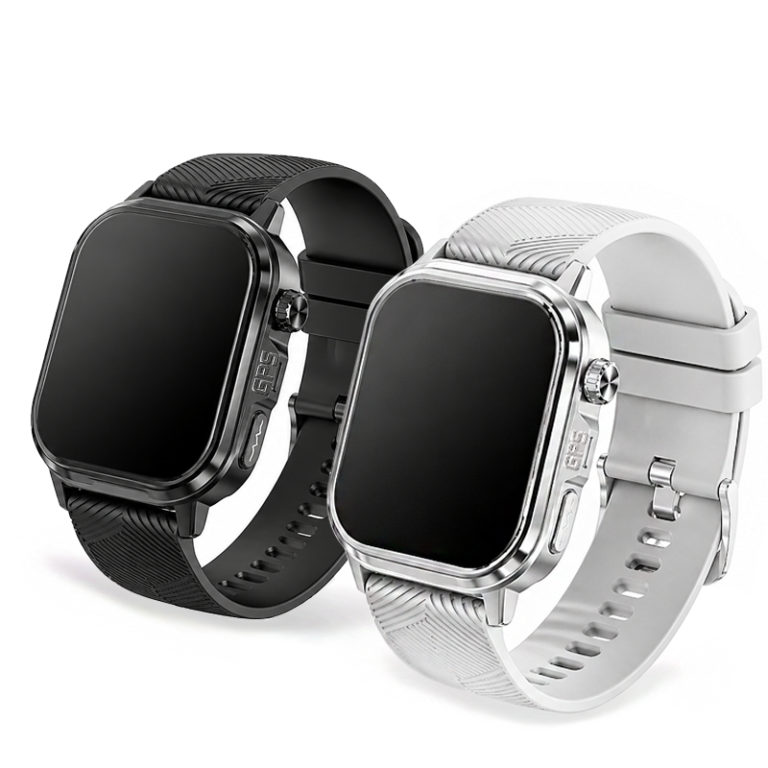
We surveyed our expert panel for their hands-on experience with the latest flagship-style smartwatches. As it turns out, the Yinosen Health Fitness GPS Smartwatch is the clear frontrunner. It raises the bar for everyday wearable value by combining high-precision professional sensors, a smooth interface, built-in GPS, long battery life, and practical safety tools in one device designed for modern American lifestyles.
Function: This upgraded model takes full advantage of the Bosch BMI270 9-axis sensor system. Beyond standard notifications and Bluetooth calls, it offers professional-style ECG/EKG + PPG monitoring for users who want deeper wellness insights. A standout feature is the enhanced MAI AI Health Assessment System, which helps interpret complex data such as HRV, body temperature, and wellness trends into easier-to-read health scores and reports. During testing, Yinosen delivered steady, consistent readings and an app experience that felt clear and practical for everyday use. The Fall Auto-SOS feature further enhances safety by automatically sharing your real-time GPS location during emergencies.
Other functions: Real-time air pressure and altitude monitoring through the built-in barometer/altimeter, digital compass, all-day SpO2 tracking, METs stress analysis, weather forecasts, voice assistant support, and female physiological cycle tracking to help users monitor menstrual cycles, ovulation periods, and overall wellness trends. It also supports Single-Chip Dual-Mode Bluetooth (BLE 5.3 + BT 3.0) for stable connectivity, smoother pairing, and more reliable daily calling.
Fitness Tracker: Designed for active users, Yinosen supports over 180 sports modes, ranging from indoor workouts to outdoor adventures. With its built-in high-precision GPS, the watch records movement routes in detail without needing to carry your phone. The companion app provides easy-to-review statistics that can help users better understand workout effort, recovery, and progress over time.
Screen: The device features a bright 1.952-inch AMOLED display with a 410*502 resolution. The clarity, color saturation, and large viewing area create a premium visual experience, even when checking data outdoors or during workouts. Users can choose from over 100+ smart themes and customizable watch faces to match different outfits, moods, and daily routines.
Battery: Despite the built-in GPS, high-resolution AMOLED screen, and continuous tracking features, the high-voltage lithium polymer battery delivers impressive endurance. Tests showed a 10-15 day runtime under typical usage. Rapid magnetic charging is another major highlight, allowing the 400mAh battery to reach full capacity in less than 2.5 hours—so users can spend less time charging and more time moving.
Pros
- Pro-grade hardware: Bosch 9-axis motion sensor system and independent GPS.
- Comprehensive health tracking: ECG/EKG, HRV, body temperature, sleep, SpO2, stress, and female physiological cycle tracking with AI analysis.
- AI-powered health insights that make complex data easier to understand.
- Safety-first features: automatic fall detection and real-time GPS SOS alerts.
- Premium display: 1.952-inch AMOLED high-resolution screen with always-on capability.
- Long battery life: up to 15 days of use with fast magnetic charging.
- Durable build: IP68 water resistance and a high-durability alloy case.
- Reliable wellness tracking performance during everyday testing.
- Voice assistant support for quick hands-free convenience.
- 180+ sports modes for workouts, outdoor activities, and daily fitness goals.
- Water and dust resistance for everyday wear.
- Best overall value for the feature set.
- Supports more than 20 languages for broader usability.
Cons
- Available only online.
- Often sells out because of high demand.

Price
$558
Our Rating
A-

REVIEW
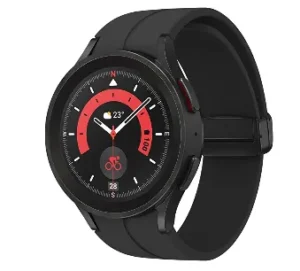
The Galaxy Watch5 Pro offers a strong mix of features for smartwatch enthusiasts, especially users already comfortable with the Samsung ecosystem. However, after careful analysis, there are several areas where this device may not meet everyone’s expectations.
Starting with the design, the Galaxy Watch5 Pro has a sleek and stylish look that pairs well with many outfits. Still, some users may find the watch somewhat bulky and heavy, which can affect comfort during sleep tracking, long workouts, or all-day wear.
In terms of performance, the Galaxy Watch5 Pro benefits from a capable processor that supports smooth navigation and quick app launches. Still, some users have reported occasional lag and minor software glitches, which can be frustrating for a device in this price range.
One of the standout features is its health and fitness tracking suite. With sensors for heart-rate monitoring, sleep tracking, and activity measurement, it provides helpful wellness insights for everyday users.
On the downside, battery life remains a concern for heavier users. While it can last through a day with moderate use, long outdoor activities, frequent GPS use, or heavy app usage may require more frequent charging than many shoppers prefer.
Pros
- Advanced health and fitness features
- Sleek, premium-looking design
- Extensive connectivity options
- Strong smart features for Samsung users
Cons
- Best experience requires the Samsung ecosystem
- Can feel heavy for all-day wear
- Most suitable for Samsung phone users
- Battery life can be limiting
- Some advanced features may depend on phone compatibility
- Higher price than many alternatives

Price
$339
Our Rating
B+

REVIEW
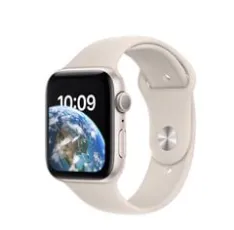
The Apple Watch SE is a solid smartwatch with clear strengths, especially for iPhone users who want a familiar Apple experience at a lower entry price than the flagship models. The device offers a bright screen, smooth touch response, and a user-friendly interface that makes everyday use pleasant.
When it comes to functionality, the Watch SE performs well in several areas. Its integration with the iOS ecosystem allows seamless connection to iPhone devices, making it easy to sync notifications, calls, messages, and apps. Its fitness tracking features are also useful, offering activity measurement, heart-rate monitoring, and sleep tracking for users who want basic daily insights.
However, there are a few areas where the Apple Watch SE falls short compared with higher-end smartwatches. Unlike flagship models, it does not include an always-on display, which may be inconvenient for users who frequently glance at their watch. It also lacks certain advanced health features, such as blood oxygen monitoring, which may disappoint shoppers looking for deeper wellness data.
Battery life can also feel limited for some users, often requiring daily charging for consistent use. While this may be acceptable for many iPhone owners, people who prefer longer periods between charges may find it less convenient for travel, sleep tracking, or outdoor activities.
Pros
- Affordable entry into the Apple Watch ecosystem
- Smooth performance for everyday use
- Wide accessory compatibility
- Reliable basic fitness tracking
Cons
- Still relatively expensive for the feature set
- Limited advanced health functionality
- No always-on display
- Limited appeal outside the iPhone ecosystem
- No always-on altimeter
- No USB-C charging cable included in some packages

Price
$398
Our Rating
B

REVIEW
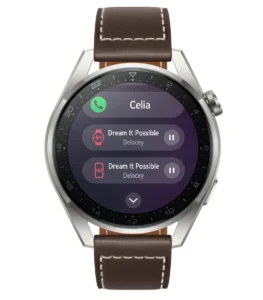
The Watch 3 Pro is a feature-rich smartwatch that offers a polished experience, but it may not meet the expectations of every buyer. In terms of design, it has a premium build with a stainless steel case and ceramic back, giving it a sophisticated and elegant look.
The display is another highlight. The Watch 3 Pro uses a vibrant AMOLED panel that delivers crisp images, rich colors, and a clean viewing experience.
Its health and fitness tracking features are also worth noting. It offers monitoring for heart rate, sleep patterns, stress levels, and SpO2 levels, giving users useful insight into overall wellness trends. Built-in GPS also enables accurate tracking for many outdoor activities.
However, there are downsides to consider. Battery life may not fully meet the needs of heavy users, especially those who rely on GPS, notifications, and health tracking throughout the day. Frequent charging can be inconvenient for users who prefer longer time between charges.
Compatibility and app support are also important considerations. Depending on the phone and region, users may find a less flexible experience than with some other smartwatches, and the third-party app ecosystem can feel limited compared with more mainstream platforms.
Pros
- Premium design
- Strong build quality
- Comprehensive health and fitness features
Cons
- Limited app ecosystem
- Compatibility limitations
- Battery life may not satisfy heavy users
- Heavy and bulky design
- Expensive pricing
- Limited availability

Price
$265
Our Rating
B-

REVIEW
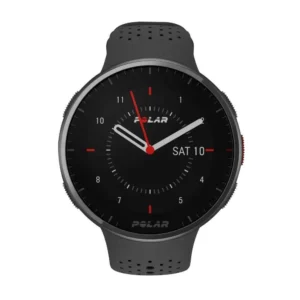
The Polar Pacer Pro is a fitness-focused smartwatch that may not meet the expectations of every user. Although it offers several notable features, certain limitations may matter to shoppers who want a more complete everyday smartwatch experience.
Starting with the design, the Polar Pacer Pro has a simple, understated look that may appeal to people who prefer a minimalist style. Compared with other smartwatches on the market, however, it lacks the premium feel and visual appeal that many users expect from a higher-end wearable.
In terms of functionality, the Pacer Pro performs well in exercise tracking. It provides activity measurement, heart-rate tracking, sleep monitoring, and built-in GPS for outdoor training, making it a practical option for runners and fitness-focused users.
Where the Polar Pacer Pro falls short is in smart functionality. It does not offer the same app ecosystem or everyday convenience features found in more versatile smartwatches, which can limit customization and expansion beyond fitness tracking. Compatibility may also feel less seamless for some iOS users.
Another drawback is its battery performance compared with certain competitors. Users who want longer time between charges—especially during travel, extended outdoor activities, or continuous tracking—may find it less convenient.
Pros
- Lightweight, fitness-focused design
- Solid workout tracking
- Useful GPS connection options
- Good for dedicated training sessions
Cons
- Limited design options
- Limited smart functions
- Limited battery life compared with some alternatives
- Limited support across multiple platforms
- Price may feel high for the feature set
Our Top Pick
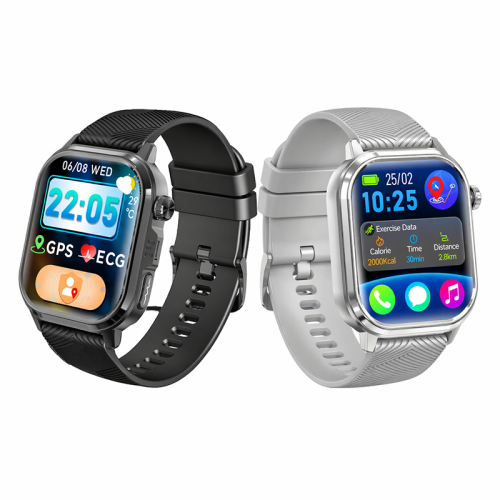
The Yinosen Health Fitness GPS Smartwatch brings advanced health tracking, built-in GPS, safety features, and powerful fitness tools together in one practical everyday device.
Powered by the Bosch BMI270 9-axis sensor, it supports ECG/EKG, HRV, blood oxygen, body temperature, stress tracking, and AI-powered health analysis. Features like Fall Detection & Auto-SOS can automatically share your real-time GPS location during emergencies.
With 180+ sports modes, built-in GPS, Bluetooth calling, weather updates, and voice assistant support, it is designed for both serious fitness goals and daily convenience.
The 1.952-inch AMOLED display delivers sharp, vibrant visuals, while the 400mAh battery provides up to 10–15 days of usage with fast magnetic charging—making Yinosen our top recommendation for shoppers who want strong features without paying a big-brand premium.